Springbrook National Park Destination Guide
Discover the Gold Coast Hinterland's Ancient Rainforests, Waterfalls & Landscapes from Above
Discover Springbrook National Park
Rising high above the Gold Coast coastline, Springbrook National Park is one of Queensland's most spectacular natural landscapes.
Only a short drive from the beaches and urban attractions of the Gold Coast, this ancient mountain environment feels like a world away. Covered in subtropical rainforest, dramatic escarpments and mist-covered valleys, Springbrook offers a rare combination of natural beauty, geological history and breathtaking viewpoints.
From above, Springbrook reveals a landscape shaped by millions of years of erosion and volcanic activity. Deep rainforest valleys, cascading waterfalls, rugged cliffs and winding mountain roads create some of the most impressive aerial scenery in South East Queensland.
At Oz Straya Panoramas, our aerial photography captures Springbrook during exceptional conditions including morning mist, waterfall seasons, dramatic storms, golden sunlight and changing weather patterns.
This guide explores the highlights of Springbrook National Park, including:
-
Natural Bridge
-
Purling Brook Falls
-
Twin Falls
-
Best of All Lookout
-
Canyon Lookout
-
Gold Coast Hinterland landscapes
-
photography opportunities throughout the seasons
Why Visit Springbrook National Park?
Springbrook National Park offers a completely different experience from the Gold Coast coastline.
While the beaches and city skyline attract millions of visitors, the hinterland provides cool mountain air, ancient rainforest, spectacular waterfalls and peaceful walking trails.
The park forms part of the Gondwana Rainforests of Australia World Heritage Area, protecting ancient ecosystems with plant species dating back millions of years.
Visitors come to experience:
-
Ancient rainforest
-
Waterfalls
-
Scenic lookouts
-
Walking tracks
-
Wildlife
-
Photography locations
-
Peaceful mountain landscapes
Springbrook is one of Queensland's most rewarding destinations for landscape photographers because conditions can change dramatically throughout the day.
A Landscape Created by Ancient Volcanoes
The dramatic scenery of Springbrook was shaped by volcanic activity millions of years ago.
The region forms part of the ancient Tweed Volcano landscape, where erosion has created:
-
steep escarpments
-
deep valleys
-
rainforest-covered mountains
-
dramatic cliffs
From the air, the scale of this landscape becomes clear. The rainforest-covered plateau contrasts strongly with the surrounding valleys and coastal plains.
Natural Bridge
Springbrook's Most Iconic Landmark
Natural Bridge is one of Springbrook National Park's most recognisable attractions.
Created by the erosion of water through volcanic rock, this spectacular formation features a natural rock arch, waterfall and cave environment.
From above, Natural Bridge reveals the relationship between:
-
rainforest canopy
-
creek systems
-
volcanic rock formations
-
surrounding valleys
It is particularly atmospheric after rainfall when water flow increases and the surrounding rainforest becomes vibrant green.
Natural Bridge is also known for its glow worm colonies, which create a unique experience after dark.
Purling Brook Falls
A Dramatic Rainforest Waterfall
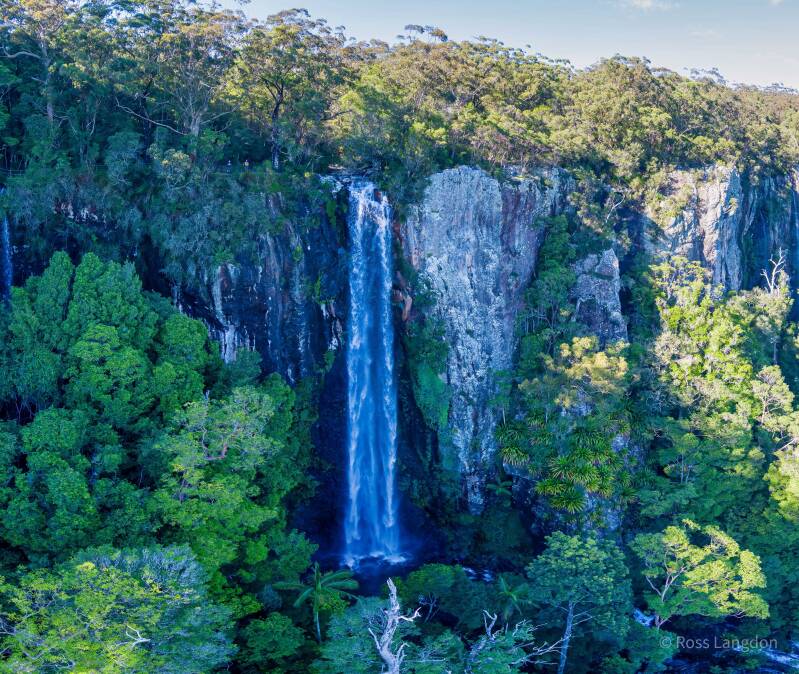
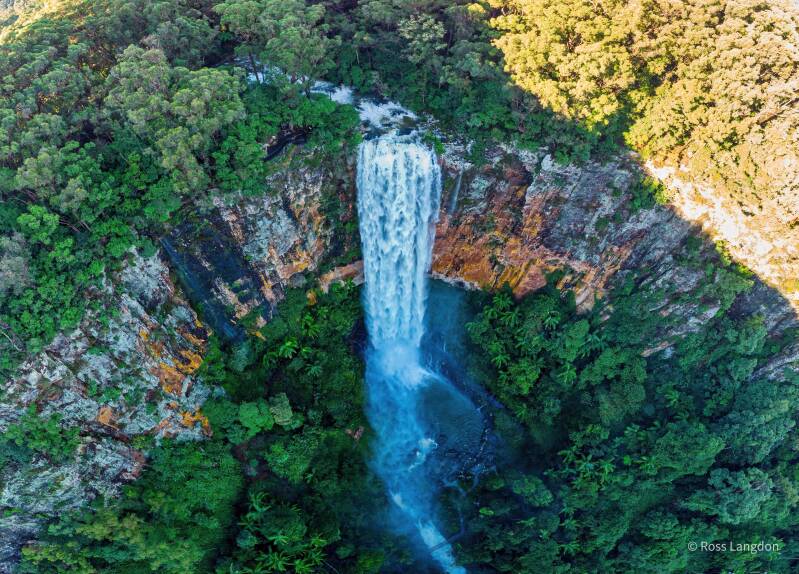
Purling Brook Falls is one of Springbrook's most photographed waterfalls.
The waterfall drops dramatically into a rainforest gorge, creating an impressive landscape feature visible from several viewpoints.
Aerial perspectives reveal:
-
the scale of the waterfall
-
surrounding rainforest valleys
-
winding creek systems
-
cliff formations
The falls are particularly spectacular after periods of rainfall when water flow increases.
The Purling Brook Falls Circuit is one of the park's most popular walks, providing different perspectives of the waterfall and surrounding landscape.
Twin Falls
Rainforest, Cliffs and Cascading Water
Twin Falls is another highlight of Springbrook National Park.
The walk leads through lush rainforest and past towering vegetation, waterfalls and dramatic cliff environments.
From above, the area showcases the density and complexity of the rainforest ecosystem.
Photography opportunities include:
-
waterfall cascades
-
rainforest textures
-
misty conditions
-
cliff landscapes
Best of All Lookout
One of Queensland's Great Mountain Views
True to its name, Best of All Lookout provides one of the most impressive views in the region.
The viewpoint looks across:
-
Springbrook's forests
-
surrounding valleys
-
distant mountain ranges
-
northern New South Wales landscapes
On clear days, the view extends towards Mount Warning and the surrounding volcanic landscape.
From an aerial photography perspective, this region demonstrates the enormous scale of the Gold Coast Hinterland.
Canyon Lookout
Canyon Lookout provides spectacular views towards the Gold Coast skyline and surrounding valleys.
The location is especially impressive because it combines:
-
rainforest foregrounds
-
mountain escarpments
-
distant coastal views
It demonstrates the unique relationship between the Gold Coast's urban coastline and its mountainous hinterland.
Gold Coast Hinterland Landscapes
Springbrook is part of a wider network of spectacular hinterland destinations.
Nearby areas include:
-
Lamington National Park
-
Tamborine Mountain
-
Currumbin Valley
-
Numinbah Valley
-
Scenic Rim landscapes
Together, these regions form one of Australia's most diverse natural environments.
Best Photography Locations
Natural Bridge
Best for:
-
rainforest photography
-
waterfalls
-
atmospheric conditions
Purling Brook Falls
Best for:
-
waterfall photography
-
aerial landscapes
-
rainforest views
Best of All Lookout
Best for:
-
panoramic landscapes
-
mountain views
-
sunrise conditions
Canyon Lookout
Best for:
-
Gold Coast skyline views
-
escarpment photography
Numinbah Valley
Best for:
-
rural landscapes
-
mountain scenery
-
dramatic weather
Sunrise Photography
Early morning is one of the best times to photograph Springbrook.
Conditions often include:
-
valley mist
-
soft golden light
-
peaceful atmosphere
-
fewer visitors
Aerial photography during sunrise reveals layers of mountains and rainforest that are often hidden during the middle of the day.
Rainforest & Mist Photography
Springbrook's rainforest environment creates unique photographic conditions.
Mist and low cloud can transform the landscape by:
-
softening distant mountains
-
creating atmospheric depth
-
highlighting rainforest textures
-
adding mood to waterfalls
Winter mornings are often especially rewarding for this style of photography.
Storm Photography
Summer storms create dramatic conditions across the Gold Coast Hinterland.
Towering clouds, rain curtains and changing light can produce powerful landscape images.
The combination of mountains, rainforest and weather makes Springbrook one of Queensland's most dramatic locations for atmospheric photography.
Wildlife & Natural Environment
Springbrook supports a diverse range of native wildlife.
Visitors may encounter:
-
colourful parrots
-
pademelons
-
wallabies
-
possums
-
reptiles
-
native rainforest birds
The protected rainforest environment provides habitat for many species found nowhere else.
Best Time to Visit Springbrook
Summer
Features:
-
lush rainforest
-
flowing waterfalls
-
dramatic storms
Autumn
Offers:
-
comfortable temperatures
-
clear views
-
excellent walking conditions
Winter
Ideal for:
-
misty mornings
-
photography
-
cooler hiking conditions
Spring
Features:
-
flowering plants
-
vibrant rainforest growth
-
pleasant weather
Commercial Aerial Photography & Licensing
Springbrook National Park aerial images are available for commercial licensing.
Suitable applications include:
-
tourism campaigns
-
accommodation websites
-
editorial publications
-
environmental projects
-
marketing material
-
corporate displays
Professional aerial photography provides a unique way to showcase Queensland's rainforest landscapes and natural attractions.
Frequently Asked Questions
Where is Springbrook National Park?
Springbrook National Park is located in the Gold Coast Hinterland, inland from the Gold Coast and within driving distance of Brisbane.
What is Springbrook National Park famous for?
Springbrook is famous for ancient rainforest, waterfalls, volcanic landscapes, scenic lookouts and wildlife.
What are the best photography locations in Springbrook?
Popular locations include Natural Bridge, Purling Brook Falls, Twin Falls, Best of All Lookout and Canyon Lookout.
When is the best time to visit Springbrook?
Autumn and winter provide comfortable conditions, while summer rainfall often enhances waterfalls and rainforest scenery.
Is Springbrook good for aerial photography?
Yes. The combination of mountains, rainforest, waterfalls and changing weather creates exceptional aerial photography opportunities.
Can I buy Springbrook aerial photographs?
Yes. Selected images are available as high-resolution digital files and commercial licences.
Are these images suitable for tourism marketing?
Yes. Springbrook imagery is suitable for tourism campaigns, publications, websites and promotional projects.
What makes Springbrook unique?
Its ancient rainforest, volcanic landscape and dramatic mountain scenery make it one of Queensland's most distinctive natural destinations.
How far is Springbrook from the Gold Coast?
Springbrook is approximately 35 kilometres inland from the Gold Coast region.
Can I visit Springbrook as a day trip?
Yes. Many visitors explore the waterfalls, lookouts and walking tracks during a day trip.
Explore More Queensland Landscapes
Continue exploring:
-
Gold Coast Aerial Photography
-
Scenic Rim Landscapes
-
Tamborine Mountain
-
Brisbane Aerial Photography
-
Glass House Mountains
-
Sunshine Coast
Experience Queensland's landscapes from above through Oz Straya Panoramas' collection of professional aerial photography.
Experience Springbrook from Above
Springbrook National Park represents one of Queensland's most extraordinary natural environments.
Its ancient rainforest, dramatic waterfalls and mountain landscapes provide endless opportunities for exploration and photography.
Through aerial photography, the true scale of Springbrook becomes visible—the relationship between rainforest, mountains, valleys and the distant coastline creating a landscape unlike anywhere else in Australia.