

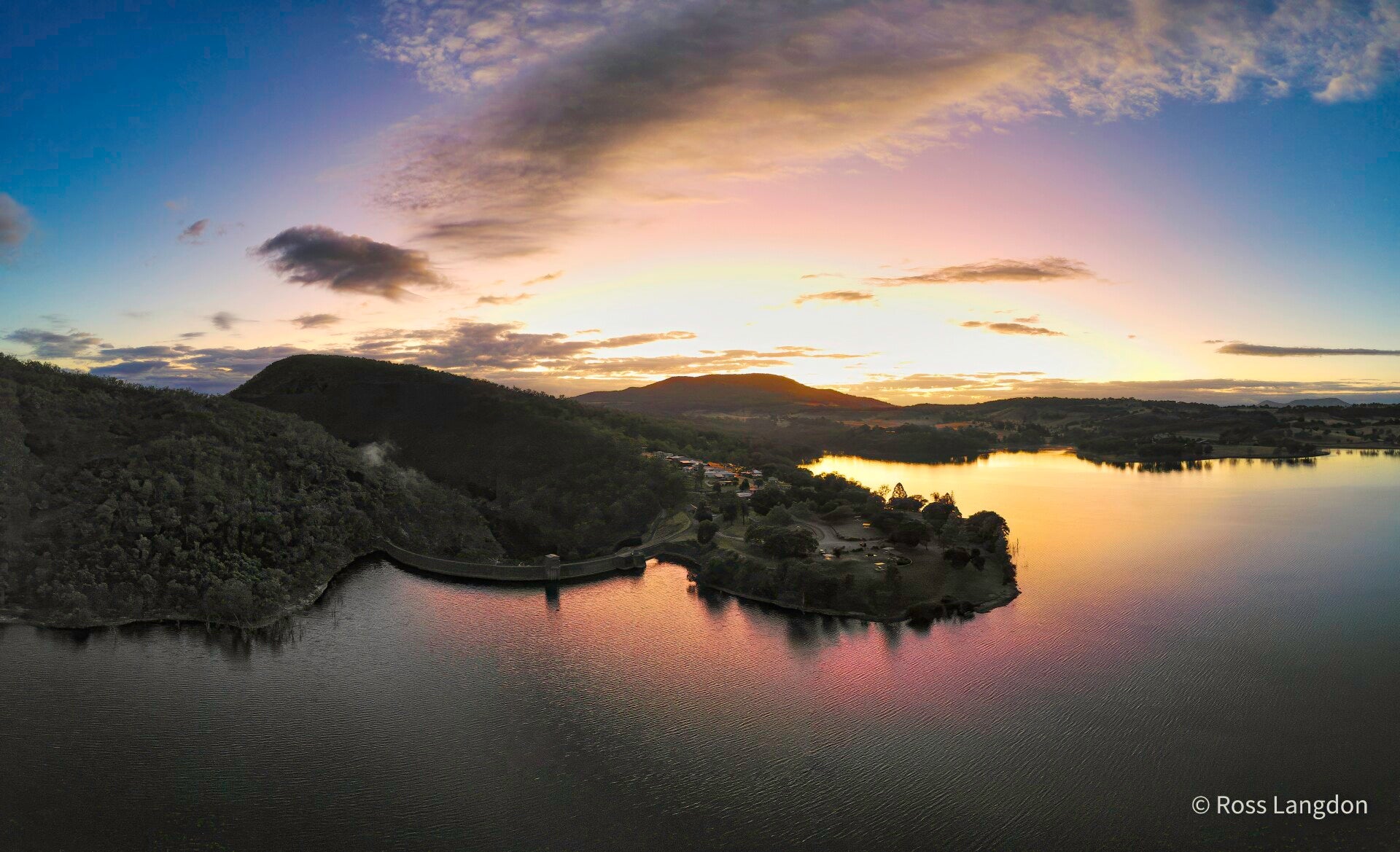
Lake Moogerah is one of the Scenic Rim's hidden gems.
Nestled against the backdrop of the Great Dividing Range, this picturesque lake is a paradise for photographers. While it’s beautiful at any time of day, there is something truly magical about capturing it from above in the early morning. The combination of still waters, soft light, and the quiet Australian bush waking up makes for unforgettable aerial imagery.
Lake Moogerah is a 1 hour 15 minute drive (105 kms) south west of Brisbane via the Cunningham Highway.
Here is your guide to making the most of a dawn drone flight at Lake Moogerah.
Why Lake Moogerah is a Dawn Drone Paradise
Lake Moogerah offers a unique canvas for aerial photographers. The expansive water surface acts as a natural mirror. In the early morning, when the wind hasn't yet picked up, the lake is often glassy calm. This creates a perfect opportunity to capture stunning reflections of the surrounding mountains and sky . The morning light is your greatest ally. The "golden hour"—the first hour after sunrise—provides soft, warm light that enhances the textures of the landscape and adds depth to your shots. Before the sun crests the hills, you also have the "blue hour," where the sky takes on deep, saturated blues that contrast beautifully with the first hints of warm light on the horizon.
Pre-Flight Checklist for a Successful Shoot Preparation is key to a successful drone flight, especially in the cool, damp conditions of a Queensland morning.
· Check the Weather and Regulations:
Before you even pack your gear, check the local weather. You're looking for clear skies or high, thin clouds and, most importantly, low wind speeds. Also, be aware of your surroundings.
Lake Moogerah is a popular area, so ensure you are not flying near any marked "No Fly Zones" or over crowds of people and always respect the privacy of any campers or early-morning fishermen.
· Prepare for the Conditions:
Morning flights come with specific challenges like low light and potential moisture. Fully charge all your batteries the night before, as cold temperatures can drain them faster . Bring spares if you have them. Wipe down your lens before takeoff to remove any overnight dew or dust.
· Scout Your Location:
Use maps or apps to get a feel for the lake's layout. Identify key features you want to capture, such as Moogerah Peaks National Park (Mount French and Mount Edwards), the cliffs, or the dam wall. Having a plan for your shots will save you valuable flight time and battery life.
Camera Settings for Stunning Lake Imagery
To make the most of the unique morning light, don't rely on auto mode. Taking manual control of your drone's camera will significantly elevate your images.
· Shoot in RAW:
This is non-negotiable for quality work. RAW files (often DNG format) capture vastly more data than JPEGs, giving you far greater flexibility to adjust exposure and colors in post-processing without degrading the image quality.
· Manage Your Exposure:
The dynamic range of a sunrise scene (bright sky, dark land) can be challenging. Use your drone's histogram to ensure you aren't "blowing out" the highlights in the sky. A great technique is to use Auto Exposure Bracketing (AEB). This takes multiple shots at different exposures, which you can later merge into a single, perfectly exposed High Dynamic Range (HDR) image.
· Set Your White Balance Manually:
Auto white balance can shift and create inconsistent colors. Set it manually to around 6000-6500 Kelvin to capture the warm tones of the sunrise consistently.
· Keep it Sharp:
Keep your ISO as low as possible (ISO 100) to minimize noise/grain in the shadows . Ensure your shutter speed is fast enough for sharp stills, and double-check that your autofocus is locked onto your subject.
Composition Tips for Lake Moogerah
Think about how you can use the landscape to create a compelling image from above.
· Rule of Thirds:
Use the lake's horizon or the line of the mountains to create a balanced composition. Position these lines on the upper or lower third of your frame, rather than directly through the middle.
· Leading Lines:
Look for natural lines that draw the viewer's eye into the photo. This could be the curve of the shoreline, a jetty, or the pattern of waves on the sand (if the wind has picked up).
· Reflections and Patterns:
Fly directly over calm water to capture the reflection of a cliff or a colorful sky. This creates perfect symmetry. Also, look for interesting patterns created by water currents or the geometric shapes of nearby farmlands.
· Vary Your Altitude:
Don't just fly high. Descend to lower altitudes to capture more detail in the shoreline or to use treetops as a foreground element to add depth to a wider shot of the lake.
From Shoot to Showpiece:
Post-Processing Your work isn't done when the drone lands. The magic continues in the editing room.
· Backup Your Footage:
As soon as you're home, transfer your files to your computer and an external drive or cloud storage.
· Bring Out the Details:
Use software like Adobe Lightroom or Photoshop. Start by adjusting the overall exposure and contrast. Then, selectively brighten shadows in the landscape and tone down any overly bright spots in the sky to reveal all the detail you captured.
· Enhance, Don't Overdo:
The goal is to reflect the natural beauty of the scene you witnessed. Subtle adjustments to saturation and clarity will make your images pop, but over-editing can make them look fake.
A natural look is almost always more powerful.
Lake Moogerah at dawn is a spectacle that demands to be seen.
If captured with the right preparation and a keen eye, your drone can reveal the serene beauty of this Queensland location in a way that ground-based photography simply cannot.
About the author
Ross Langdon is an award-winning aerial landscape photographer specialising in South East Queensland. He has spent years documenting the region's landscapes through drone photography and creates the destination guides and photography articles published on this website. Learn more about Ross.


