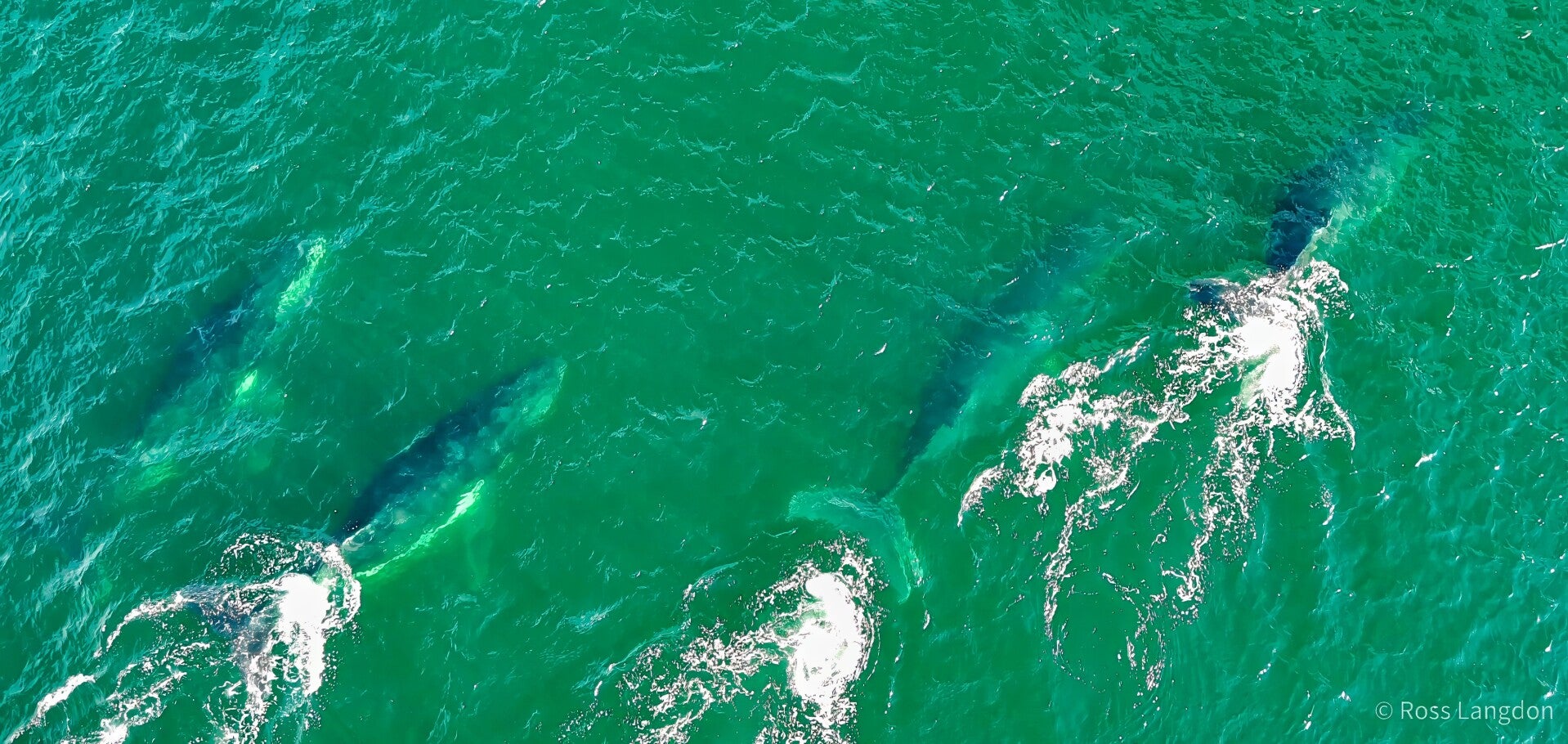
Natures Giant in Motion: Capturing the humpback whale migration at Norries Headland Cabarita Beach
by Ross Langdon.
There’s a rhythm to life on the Tweed Coast, dictated by the swell, the sun, and the seasons.
But one of the most awe-inspiring rhythms is the annual migration of the humpback whale. Each year, from May to November, these gentle giants parade past our shores, and there's no better vantage point than the skies above Norries Headland at Cabarita Beach. For the past few seasons, we’ve taken to the air with our drones, not just to observe, but to respectfully document this incredible journey. The result is a perspective on these majestic creatures that was once the sole domain of researchers and documentary filmmakers.
The Stage:
Norrie Head, Cabarita Norrie Head is more than just a headland; it's a prime balcony seat for the Humpback Highway. The deep water close to shore provides a reliable path for the whales as they travel north to the warm breeding grounds of Queensland and later return south to the rich feeding grounds of Antarctica. From this vantage point, with a drone in hand, we wait. The calm winter and spring days often provide the perfect conditions: light winds, clear water, and the patient hope of a tell-tale blow on the horizon.
The Chase: A Drone's-Eye View:
"Chasing" is perhaps the wrong word. When it comes to wildlife, especially protected species like humpback whales, it's all about patient pursuit and respectful observation. Australian law requires drones to stay at least 100 meters away from whales, and we strictly adhere to this, often flying even higher to minimize any potential disturbance. The true "chase" is the race against time, light, and battery life. Spotting a pod is just the beginning. The goal is to position the drone almost overhead to capture those breathtaking moments of natural behavior.
The Power of the Peduncle:
From above, you can truly appreciate the raw power as a whale throws its tail (fluke) high into the air for a deep dive. The way the water cascades off its body is a spectacle of nature's engineering. ·
Breaching from Above:
While a breach is spectacular from the beach, from the sky it’s transcendental. Seeing a 40-tonne animal launch its entire body out of the water, surrounded by a massive explosion of white water, is a humbling sight that never gets old.
The Intimacy of a Mother and Calf:
One of the most privileged sights is a mother and her newborn calf resting in the swells. From above, you see the calf mirroring its mother's every move, learning and bonding in the safety of her shadow. We are extra cautious with these pairs, keeping a significant distance to ensure their peace. ·
The Lunge Feed:
On the southern migration, when the whales are hungry, we sometimes capture them lunge-feeding. The sight of a whale surging from the depths with its pleated throat distended, engulfing a school of fish, is a dramatic display of survival.
Capturing the Magic: Video & Images
The magic of drone technology lies in its ability to tell a story without a single engine roar or intrusive presence.
The Scale Shot:
By flying almost directly overhead and using the camera zoom feature, we can capture the immense scale of the whale against the endless blue canvas of the ocean. These top-down shots are minimalist, powerful, and reveal the unique patterns on each whale's fluke and back—their fingerprint.
The Environmental Portrait:
Pulling the drone back to include the headland, the sweep of Cabarita Beach, and the rolling waves provides context. It shows these magnificent creatures moving through our landscape, a powerful reminder of the wild world right on our doorstep.
Cinematic Video:
There is nothing quite like the smooth, tracking shot of a whale as it surfaces, blows, and dives. Set to a gentle, ambient soundtrack, this footage brings the serene, powerful rhythm of their journey to life.
A Privilege and a Responsibility:
Flying a drone near these animals is an immense privilege that comes with a non-negotiable responsibility. Our number one rule is the welfare of the whale. If a whale shows any sign of changing its behaviour due to the drone—altering its course, speeding up, or becoming erratic—we immediately retreat and land. We are guests in their world, and our goal is to capture their beauty without leaving a trace, except on our memory cards.
Witness the Journey for Yourself:
We've compiled some of our most breathtaking footage and images from this year's migration into the gallery below. We hope it fills you with the same sense of wonder and respect for these ocean giants that we feel every time we send a drone into the sky.
Did you watch the migration this year?
Disclaimer:
All drone operations were conducted under the strict regulations of the CASA and NSW Department of Planning and Environment
Ross Langdon, Drone Photographer/Videographer & Nature Enthusiast
Except as permitted by the copyright law applicable to you, you may not reproduce or communicate any of the content on this website, including files downloadable from this website, without the permission of the copyright owner.