*Chasing Waterfalls: A Drone Photographer’s Journey Through Springbrook National Park*
By Ross Langdon
There’s something almost magical about waterfalls—how they carve through ancient rock, how their mist kisses your skin, and how the sound of cascading water seems to hush the world around you. As a drone photographer, I’ve always been drawn to capturing nature’s raw beauty from perspectives few get to see. This spring, I set my sights on one of Queensland’s most breathtaking landscapes:
*Springbrook National Park*, home to some of the most stunning waterfalls on the Gold Coast hinterland. Nestled within the Gondwana Rainforests—a UNESCO World Heritage site—Springbrook is a lush, emerald paradise where waterfalls tumble from volcanic cliffs into deep, fern-lined gorges. Over the course of a misty spring morning, I embarked on a mission to capture *Purlingbrook Falls, Bilbrough Falls, Gomoolahra Falls*, and *Twin Falls* from the sky, revealing their hidden elegance through the lens of my drone.
*Purlingbrook Falls – The Icon of Springbrook*
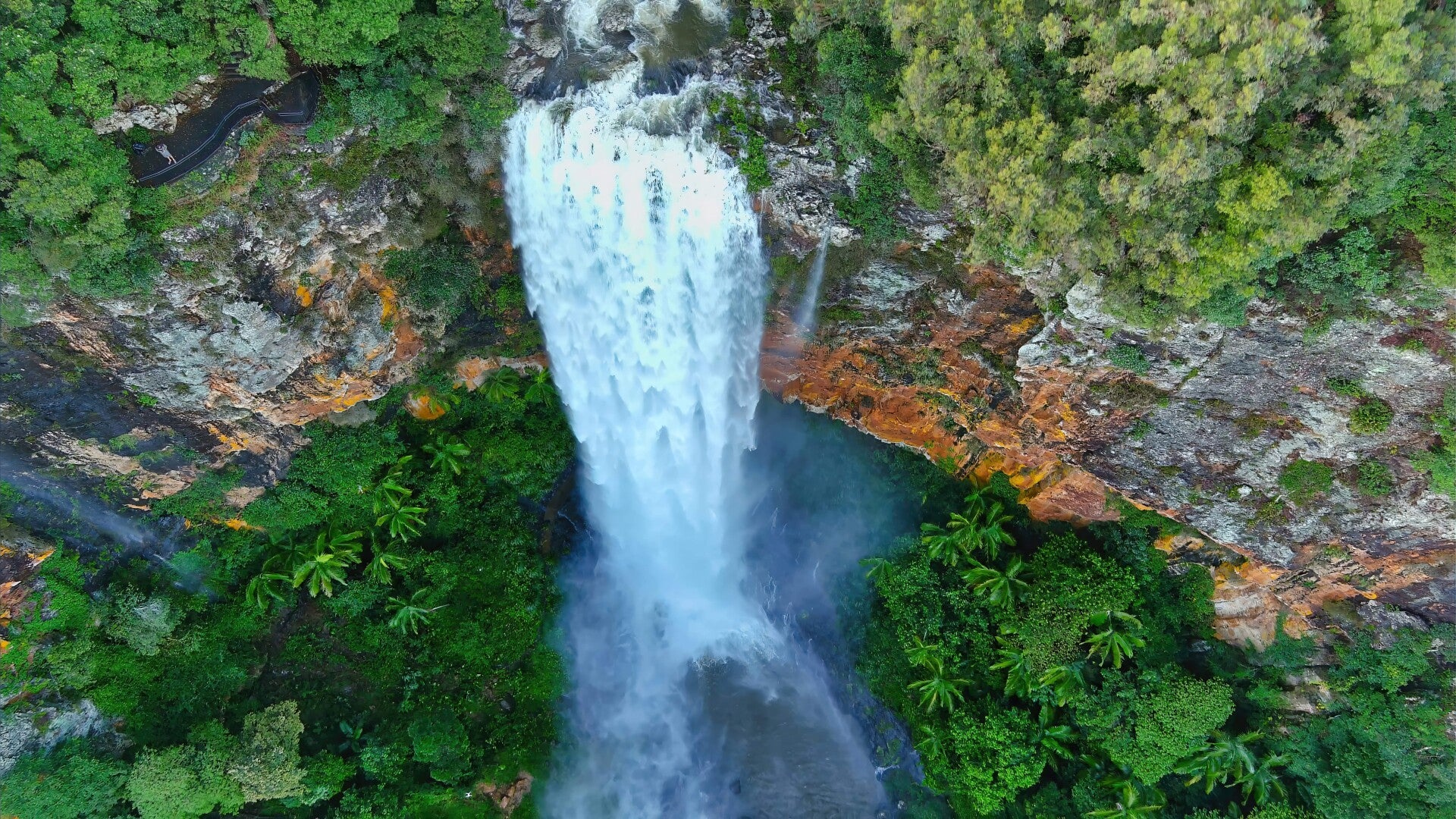
My journey began at the popular Purlingbrook Falls lookout. Even from the ground, the view is jaw-dropping—a 110-meter cascade plunging into a serene pool below, framed by towering cliffs and ancient Antarctic beech trees. But it was from the air that the full drama unfolded. With careful takeoff from a safe, designated zone, my drone ascended above the treetops, revealing the waterfall’s full descent in a single frame. The early morning light glistened off the falling water, creating a silver ribbon against the dark basalt rock. The surrounding rainforest stretched endlessly in every direction, a sea of green that pulsed with life. It was here I captured one of my favorite shots: the waterfall snaking through the gorge like nature’s own sculpture.
Tip: Fly early to avoid crowds and catch the soft, diffused light before the sun breaks through the canopy.
*Bilbrough Falls – The Hidden Gem*
A short drive and hike later, I arrived at Bilbrough Falls, a lesser-known but equally majestic cascade that tumbles over layered rock into a tranquil pool. Unlike Purlingbrook, Bilbrough offers fewer viewing platforms, making aerial photography the perfect way to appreciate its full beauty. From above, the drone revealed the waterfall’s elegant split into two streams, weaving through moss-covered boulders. The surrounding cliffs, draped in vines and tree ferns, created a cathedral-like effect—nature’s own sanctuary. The sound of the falls echoed in the gorge, and with the drone hovering quietly overhead, I felt like I was witnessing a secret the forest had kept for centuries.
.
*Gomoolahra Falls – A Whisper in the Rainforest*
Tucked deep within the Little Nerang Creek Valley section of the park, Gomoolahra Falls is often overlooked. But for photographers, it’s a dream. This narrow, multi-tiered cascade flows down a mossy cliff face, surrounded by towering coachwood and black booyong trees. Flying here required extra caution—dense canopy and unpredictable wind gusts in the valley made navigation tricky. But the effort paid off. From above, the drone captured the delicate flow of water threading through the greenery like veins in a leaf. The contrast between the dark rock, vibrant moss, and shimmering water created a composition that felt both intimate and epic.
Insight: Gomoolahra reminds us that some of the most beautiful things in nature aren’t the loudest—they’re the quiet, persistent ones.
*Twin Falls – Nature’s Perfect Pair*
My final stop was Twin Falls, a dramatic double cascade that plunges side by side into a deep, crystal-clear pool. Located along the Twin Falls Circuit, this spot is popular with hikers, but few get to see it from above. Launching from a ridge nearby, I guided the drone down into the gorge, capturing the symmetrical beauty of the two falls flowing in harmony. Sunlight pierced through the canopy in golden shafts, illuminating the spray and creating a dreamlike haze. The reflection of the falls in the still pool below doubled the impact—nature mirroring itself in perfect balance. This was the shot I’d been waiting for: a single frame that encapsulated the power, grace, and serenity of Springbrook’s waterfalls.
*Responsible Drone Flying in National Parks*
Before I wrap up, a crucial note: *drone use in national parks requires care and compliance*.
Springbrook National Park is part of the Gondwana Rainforests, a protected area home to rare and endangered species like the Albert’s lyrebird and the spotted-tailed quoll.
I ensured my flights were conducted in accordance with *Queensland Parks and Wildlife Service (QPWS)* & *CASA* regulations.
Avoided disturbing wildlife or other visitors.
Stayed within visual line of sight and below 120 meters AGL.
Respected designated no-fly zones and cultural sites.
Always check local regulations and obtain permits if required.
Leave no trace—both on the ground and in the sky.
*Final Thoughts*
Springbrook National Park is more than a collection of waterfalls—it’s a living, breathing ecosystem where water, rock, and rainforest converge in timeless harmony. Capturing it from the air wasn’t just about getting the perfect shot; it was about gaining a deeper appreciation for the scale and intricacy of this ancient landscape.
As a drone photographer & videographer, we have a unique privilege—to see the world from above, to reveal hidden patterns, and to share nature’s beauty with others.
But with that privilege comes responsibility. Let’s fly thoughtfully, respectfully, and always with wonder.
If you’re planning a trip to Springbrook, don’t just walk the trails. Look up. Look down.
And if you have a drone, consider how you might capture its soul—without disturbing its peace.
Until the next flight,
Ross Langdon, Drone Photographer & Nature Enthusiast
Except as permitted by the copyright law applicable to you, you may not reproduce or communicate any of the content on this website, including files downloadable from this website, without the permission of the copyright owner.